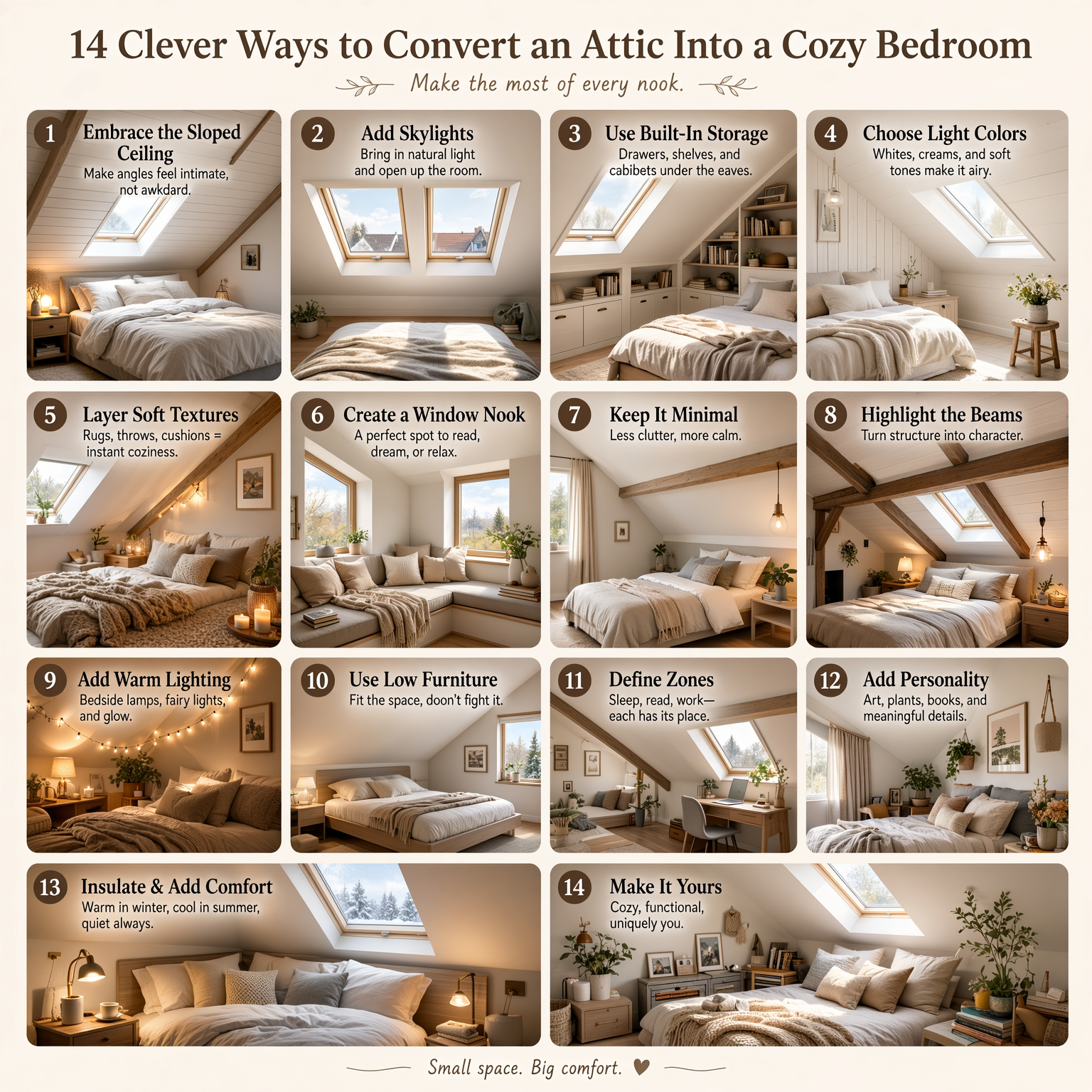
14 Clever Ways to Convert an Attic Into a Cozy Bedroom
Turning an unused attic into a cozy bedroom is one of the smartest ways to add valuable living space without a full home addition. This Pinterest-inspired guide shares 14 clever ways to convert an attic into a bedroom, complete with image prompts and SEO-optimized copy, to help you plan a genuinely restful retreat.
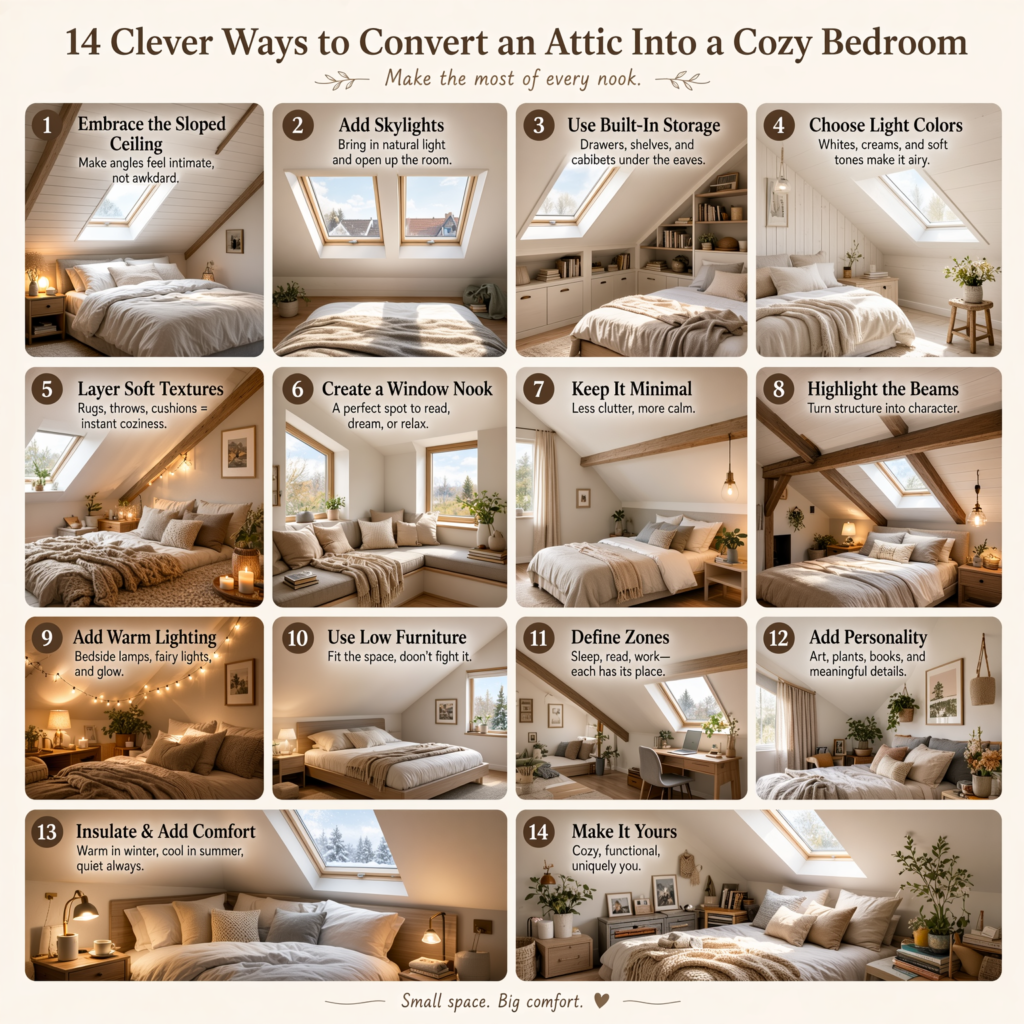
1. Start With Proper Insulation
Proper insulation is the foundation of any successful attic-to-bedroom conversion, since attics without adequate insulation become uncomfortably hot or cold depending on the season throughout the year. Addressing this step first ensures the finished bedroom remains genuinely livable rather than simply decorative, regardless of outside temperature fluctuations.

This clever attic conversion step often requires professional installation to meet local building codes and ensure proper ventilation alongside the insulation itself. Skipping this foundational work, no matter how beautifully the room is styled afterward, ultimately undermines the attic bedroom’s comfort and usability throughout every season of the year.
2. Reinforce the Flooring for Daily Use
Attic floors are often only rated for light storage, not the daily foot traffic, furniture, and bedding weight a bedroom requires throughout regular use. Reinforcing the subflooring and joists before installing finished flooring ensures the space can safely support everything a genuine bedroom needs without structural concerns down the line.
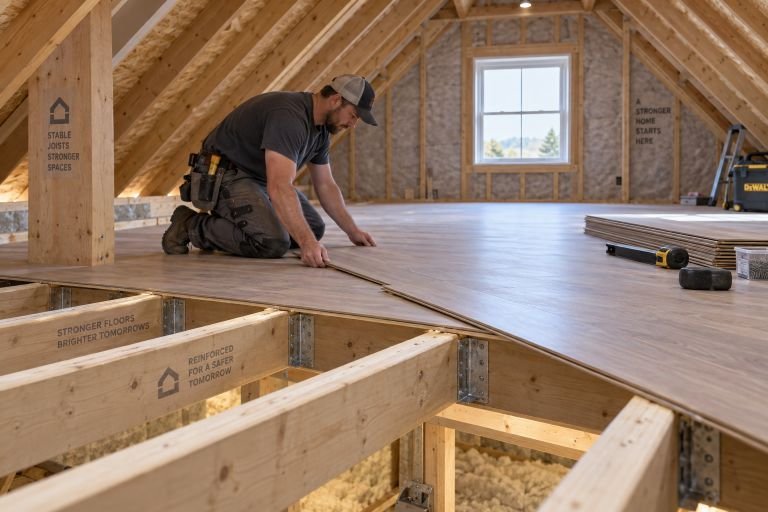
This clever conversion step matters enormously even if it’s not visible once the room is finished, since structural safety underlies everything else in the design process. Addressing flooring early prevents costly fixes later and ensures the attic bedroom remains safe and sturdy for years of comfortable, everyday use.
3. Add a Skylight or Dormer Window
Adding a skylight or dormer window addresses one of the most common attic limitations, minimal natural light, transforming a dim, closed-off space into a bright, genuinely inviting bedroom throughout the day. This upgrade also improves ventilation, which matters significantly for comfort once the attic becomes a regularly used sleeping space.
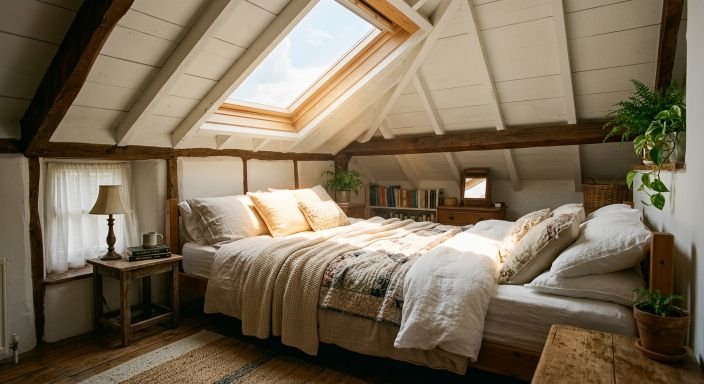
This clever way to convert an attic into a bedroom often delivers the most dramatic visual transformation of the entire renovation project, instantly changing the room’s entire atmosphere. Beyond aesthetics, natural light also reduces reliance on artificial lighting during daytime hours, supporting both comfort and energy efficiency simultaneously.
4. Position the Bed Beneath the Lowest Slope
Positioning the bed beneath the attic’s lowest ceiling slope, where standing clearance isn’t required, makes clever use of a tricky architectural feature that often limits furniture placement elsewhere in the room. This simple layout decision maximizes usable floor space in the taller portions of the attic for dressers or seating.
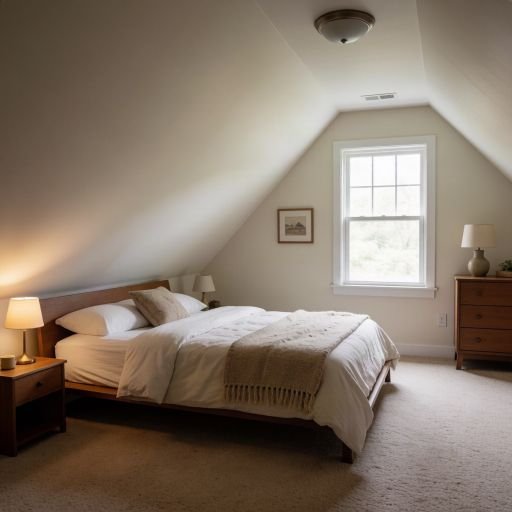
This approach to attic bedroom conversion also enhances the cozy, tucked-in feeling many people associate with sloped-ceiling sleeping spaces, adding charm rather than compromise. Choosing a low platform bed frame further emphasizes this clever use of the room’s unique shape, turning a limitation into genuine design character.
5. Build Custom Storage Into the Eaves
Building custom storage directly into the attic’s eaves solves one of the biggest challenges this type of conversion presents, making practical use of low-clearance areas that standard furniture simply can’t fill. Drawers, shelving, or cabinets fitted beneath the slanted walls maximize every available inch without disrupting the room’s layout.
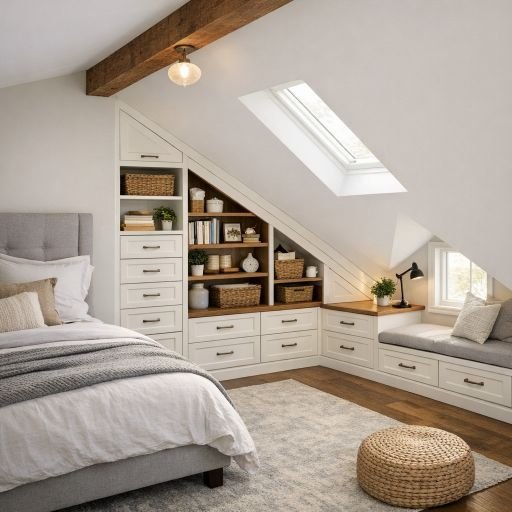
This clever way to convert an attic into a bedroom keeps the finished space organized and clutter-free while turning awkward corners into genuinely functional storage solutions. Built-in storage also adds resale value, since custom carpentry is often viewed as a premium upgrade by future buyers evaluating the home.
6. Choose Furniture Scaled to the Space
Choosing furniture scaled specifically to an attic’s often irregular dimensions prevents the cramped, overcrowded feeling that standard-sized pieces can create within a sloped-ceiling bedroom. Compact dressers, slim nightstands, and low-profile beds all fit more comfortably than bulky furniture designed for conventional rectangular rooms throughout the home.
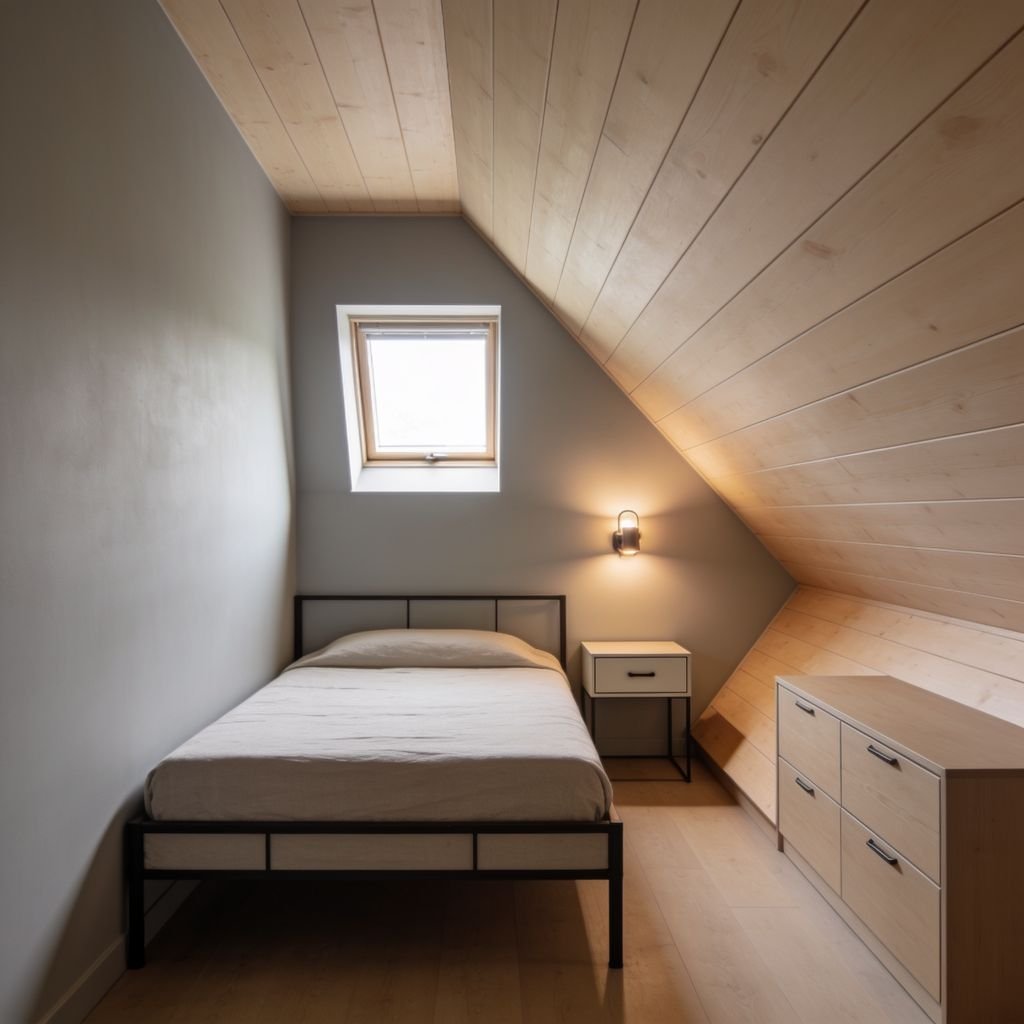
This clever conversion strategy requires measuring the attic carefully at various points before purchasing any furniture, accounting for both floor space and the sloped ceiling’s changing height throughout the room. Correctly scaled furniture ultimately determines how functional and comfortable the finished attic bedroom actually feels for daily use.
7. Add Proper Heating and Cooling
Attics are notorious for extreme temperature swings, making proper heating and cooling essential for anyone planning to actually sleep in the converted space throughout the year. A ductless mini-split system, extended ductwork, or supplemental heating and cooling units all offer practical solutions depending on the home’s existing HVAC setup.
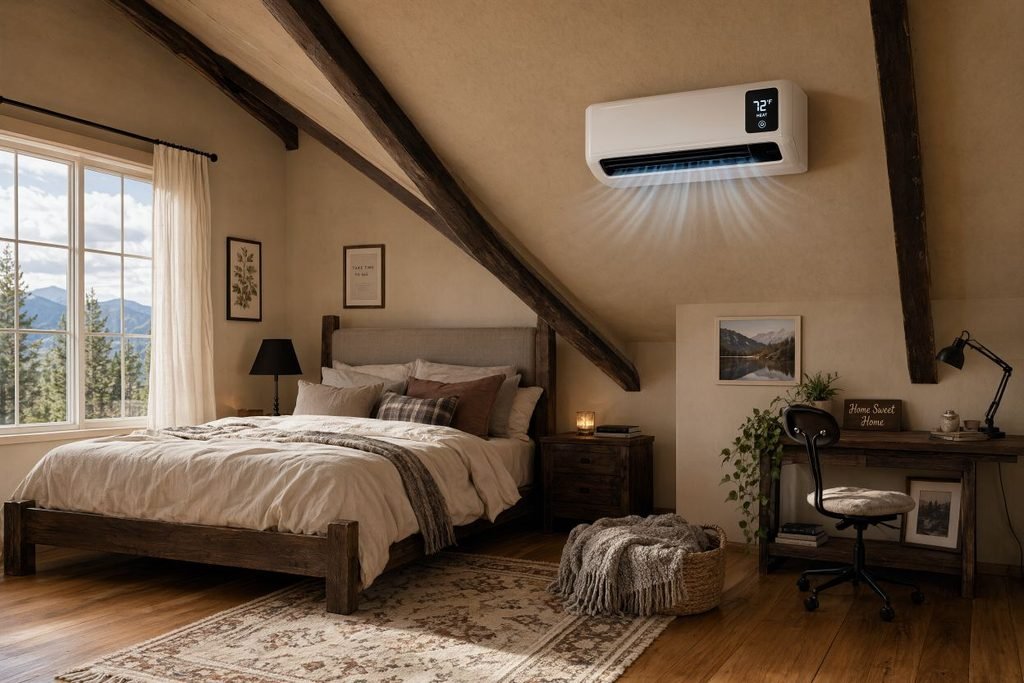
This clever way to convert an attic into a bedroom addresses comfort directly, ensuring the room remains usable during both summer heat and winter cold rather than only during mild weather. Skipping this step often results in a beautifully designed room that sits unused during extreme temperature months.
8. Use Light Colors to Open Up the Space
Light, neutral colors work wonders in attic bedrooms, visually expanding a space that often feels naturally more compact due to sloped ceilings and limited square footage throughout the room. Soft whites, light grays, and pale neutrals on both walls and ceiling help the room feel open rather than confined.

This clever conversion technique proves especially effective when the same light color is used across both walls and ceiling, blurring the line where angled surfaces meet for smoother visual flow. Adding color through textiles or decor keeps the space from feeling sterile while maintaining this bright, expansive foundation.
9. Install a Proper Staircase for Safety and Comfort
Replacing a pull-down ladder or narrow, steep stairs with a proper, code-compliant staircase is essential once an attic transitions from occasional storage access to a daily-use bedroom. This clever conversion step significantly improves both safety and convenience, especially for nighttime trips or carrying items up and down regularly.

This upgrade often requires sacrificing some floor space elsewhere in the home, but the improved accessibility makes the attic bedroom genuinely functional for everyday living rather than feeling like an occasional-use afterthought. A proper staircase also supports resale value, since legal bedrooms typically require safe, compliant access.
10. Add Warm Textures and Soft Lighting
Warm textures and soft, layered lighting transform a converted attic from simply functional into a genuinely cozy retreat worth looking forward to at the end of each day. Chunky knit throws, plush rugs, and warm-toned bulbs balance the room’s often compact, angular character with tactile comfort throughout the space.

This clever way to convert an attic into a bedroom prioritizes feeling over strict formality, layering multiple soft elements together for maximum coziness. Soft lighting sources, like string lights or dimmable lamps, further enhance the inviting atmosphere without requiring major electrical changes or extensive additional renovation work.
11. Check Legal Ceiling Height Requirements
Checking local building codes for minimum ceiling height requirements is a crucial, often overlooked step before converting an attic into a legally recognized bedroom within your home. Many jurisdictions require a certain percentage of the room to meet a specific height minimum for the space to count as livable square footage.
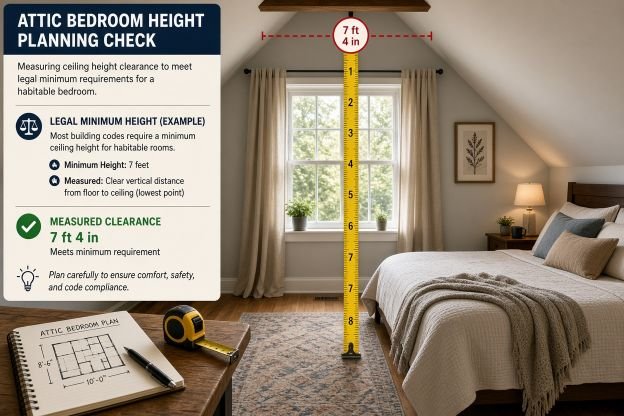
This clever planning step protects your investment, ensuring the finished attic bedroom adds genuine value and can be legally marketed as such if you ever sell the home. Skipping this research can result in a beautiful room that technically can’t be classified as an official bedroom on paper.
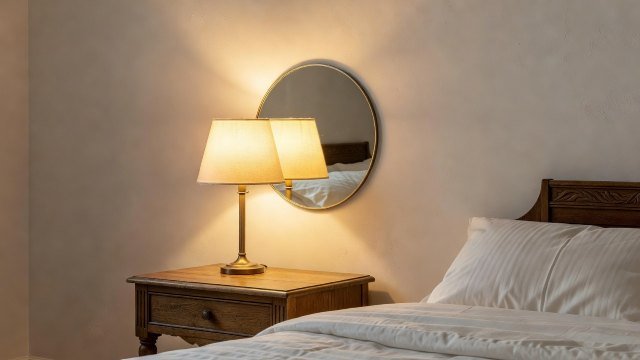
12. Use Mirrors to Enhance Light and Space
Mirrors can make a converted attic bedroom feel significantly larger and brighter than its actual square footage suggests, addressing one of the most common challenges these spaces present. Positioning a mirror opposite a window doubles the perceived light source, while mirrors placed elsewhere help bounce brightness into shadowed corners.

This clever conversion trick proves particularly valuable in attics with limited natural light, where windows alone aren’t sufficient to brighten the entire sloped layout adequately throughout the day. Combining mirrors with layered lighting ensures even illumination without relying on a single harsh overhead fixture in the finished bedroom.
13. Add Ventilation for Year-Round Comfort
Proper ventilation matters enormously in an attic bedroom, since these spaces can trap heat and humidity more easily than rooms on lower floors throughout the home. A ceiling fan, operable windows, or a small ventilation system all help maintain comfortable airflow regardless of the season or outdoor weather conditions.

This clever way to convert an attic into a bedroom addresses a practical concern that’s easy to overlook during the design phase but significantly impacts everyday comfort once the room is in regular use. Good ventilation also helps prevent moisture buildup, protecting both the room’s finishes and its long-term structural integrity.
14. Personalize the Space With Meaningful Decor
Once the structural and functional elements are addressed, personalizing the attic bedroom with meaningful decor transforms it from a renovated space into a genuine personal retreat worth retreating to each night. Family photos, favorite books, or sentimental objects add warmth and individuality throughout the newly converted room.
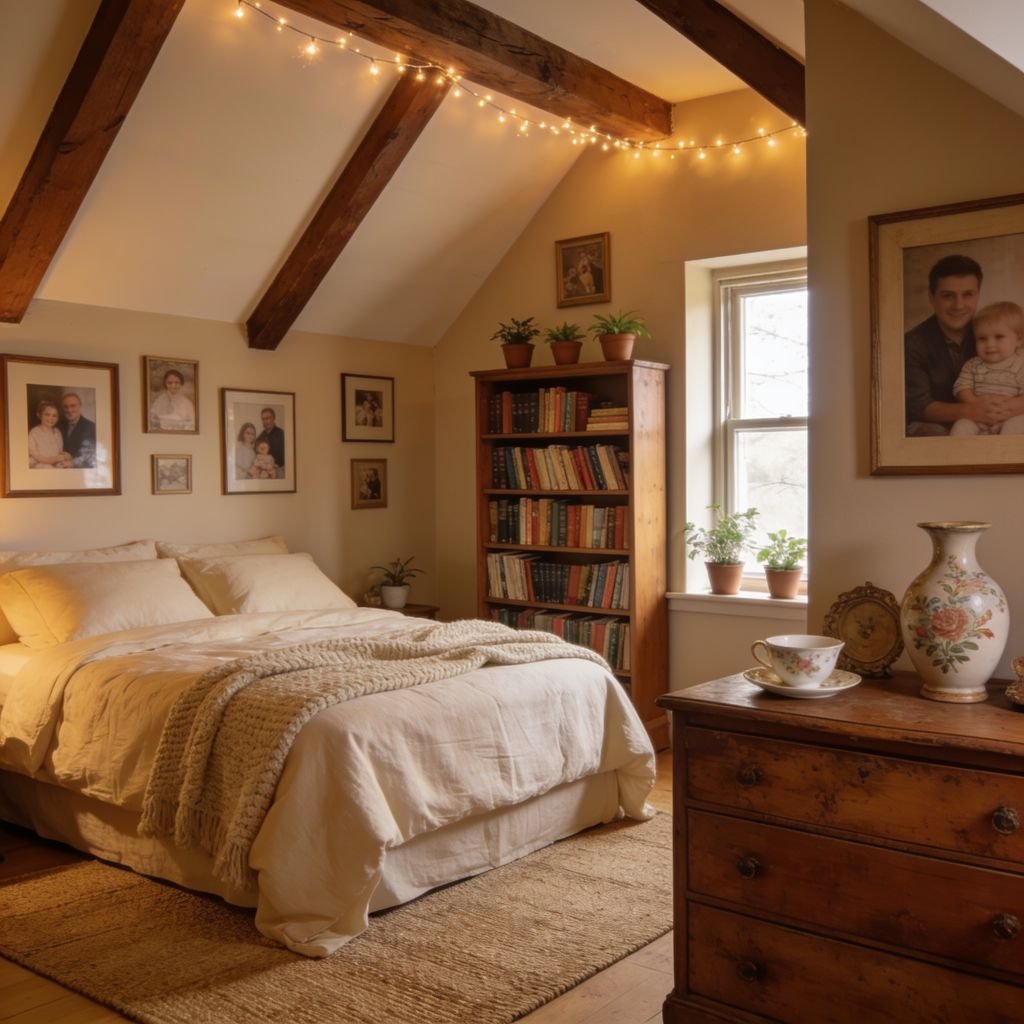
This final clever step in the attic conversion process ensures the finished bedroom feels authentically yours rather than simply a technically successful renovation project. Balancing thoughtful structural planning with genuine personal touches ultimately creates an attic bedroom that feels both functional and deeply, comfortably personal every single day.