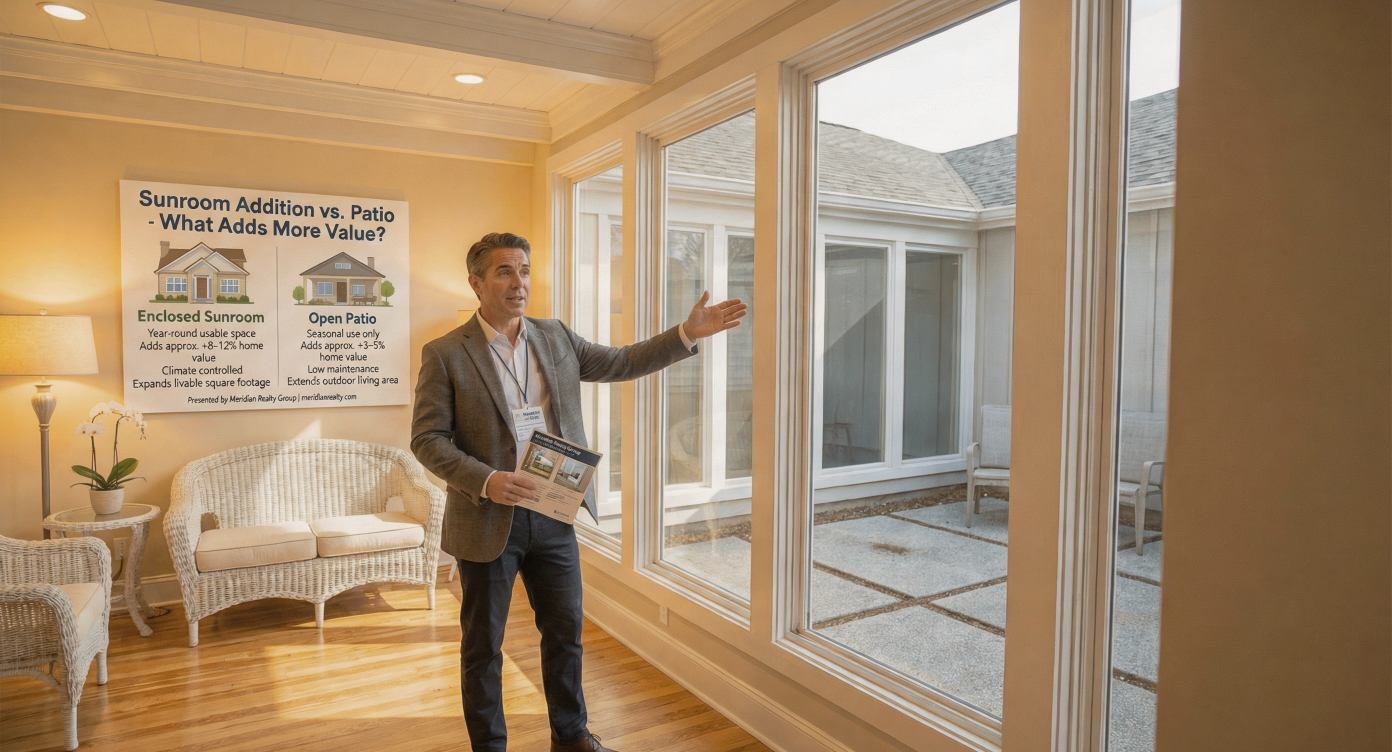
17 Differences Between a Sunroom and a Patio Explained
Choosing between a sunroom and a patio comes down to understanding how each space functions differently in a home. While both offer wonderful ways to enjoy your outdoor surroundings, a sunroom provides an enclosed, climate-controlled environment, while a patio remains an open-air extension of your yard. From construction costs and weather protection to year-round usability and resale value, these two additions serve distinct purposes despite their similar appeal. Understanding these differences helps homeowners decide which option best fits their lifestyle, climate, and budget. These seventeen key distinctions break down everything you need to know when comparing a sunroom to a patio for your next home improvement project.
1. Enclosure and Structure
A sunroom is a fully enclosed structure with walls, a roof, and extensive windows, creating a room that’s part of the home’s interior footprint. This enclosure provides a defined, weatherproof space that functions similarly to any other indoor room in the house.
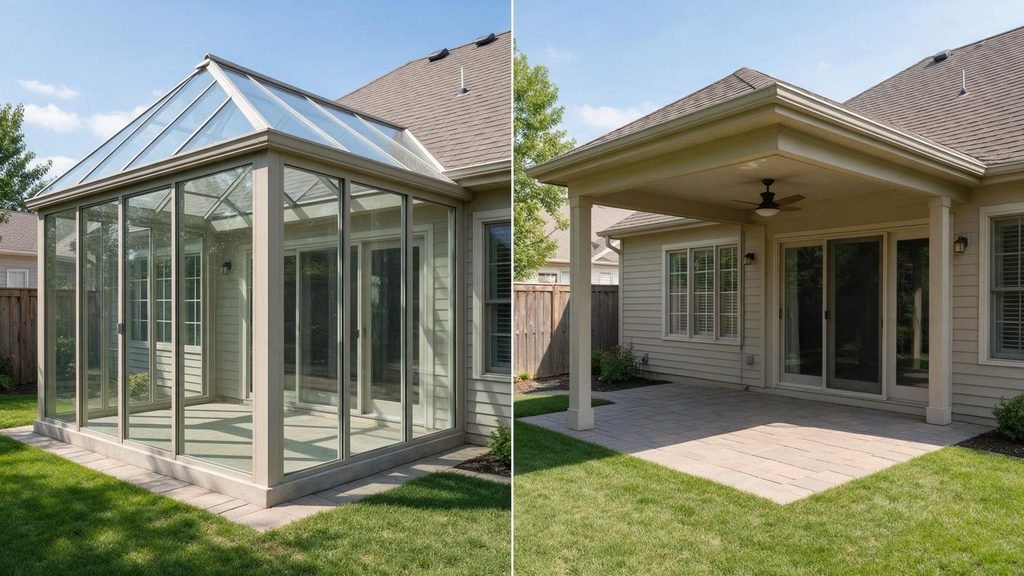
A patio, by contrast, remains an open-air space with no walls or roof, though some include a pergola or awning for partial shade. This lack of enclosure keeps patios connected to the outdoors, offering a different experience than the sealed environment of a sunroom.
2. Weather Protection
Sunrooms offer complete protection from rain, wind, snow, and extreme temperatures thanks to their sealed windows and solid roofing. This weatherproofing allows homeowners to use the space comfortably regardless of outdoor conditions throughout the year.
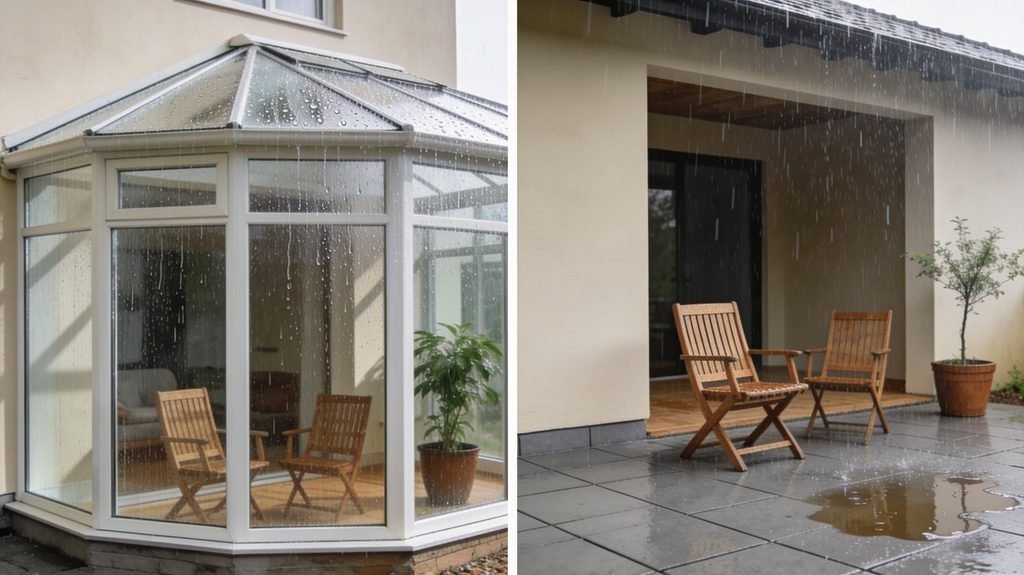
Patios provide minimal weather protection, leaving furniture and occupants exposed to rain, direct sun, and wind unless covered by an umbrella or pergola. This exposure limits patio usability during inclement weather, making it a more seasonal or occasion-dependent space.
3. Year-Round Usability
A properly insulated sunroom can be used comfortably in nearly any season, since heating and cooling systems can be installed to maintain a pleasant indoor temperature regardless of outdoor conditions. This makes sunrooms valuable as true four-season living spaces.
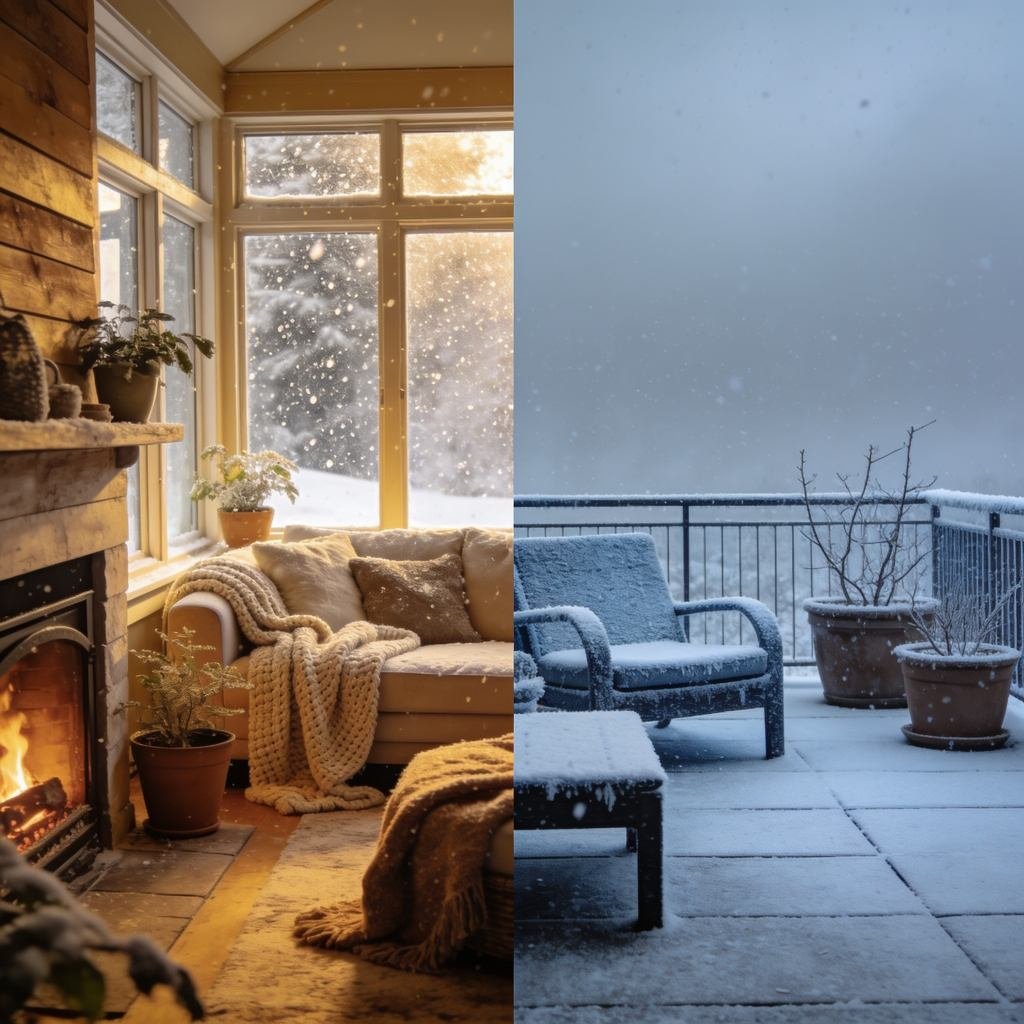
Patios are typically limited to fair-weather use, becoming impractical during winter cold, summer heat waves, or rainy seasons without significant outdoor heating or cooling investments. This seasonal limitation makes patios more of a warm-weather amenity than a year-round living space.
4. Construction Cost
Building a sunroom generally costs significantly more than a patio due to the need for foundations, framing, windows, roofing, insulation, and often electrical or HVAC work. This substantial construction creates an entirely new enclosed room addition to the home.
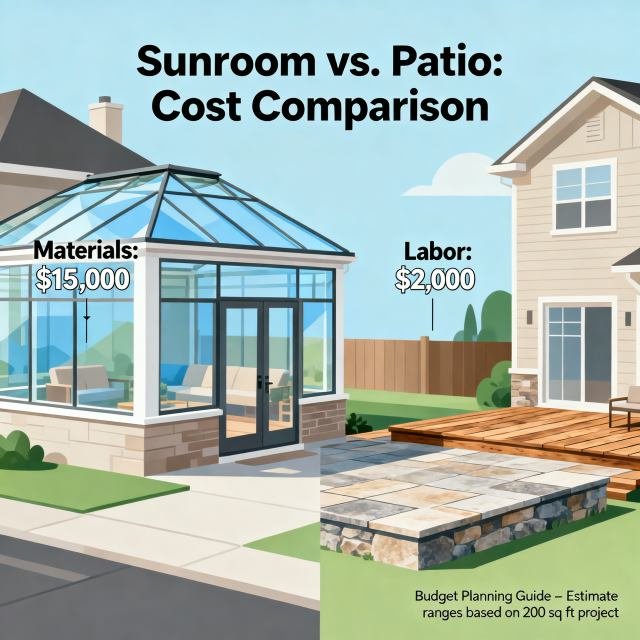
Patios are considerably more budget-friendly since they typically require only a flat, paved or decked surface without walls, windows, or climate control systems. This lower cost makes patios an accessible option for homeowners wanting outdoor living space without major structural investment.
5. Resale Value Impact
A well-built sunroom often adds significant resale value to a home, since it effectively increases the property’s usable square footage as a genuine interior room. Buyers frequently view sunrooms as valuable, functional living space that expands the home’s overall livability.
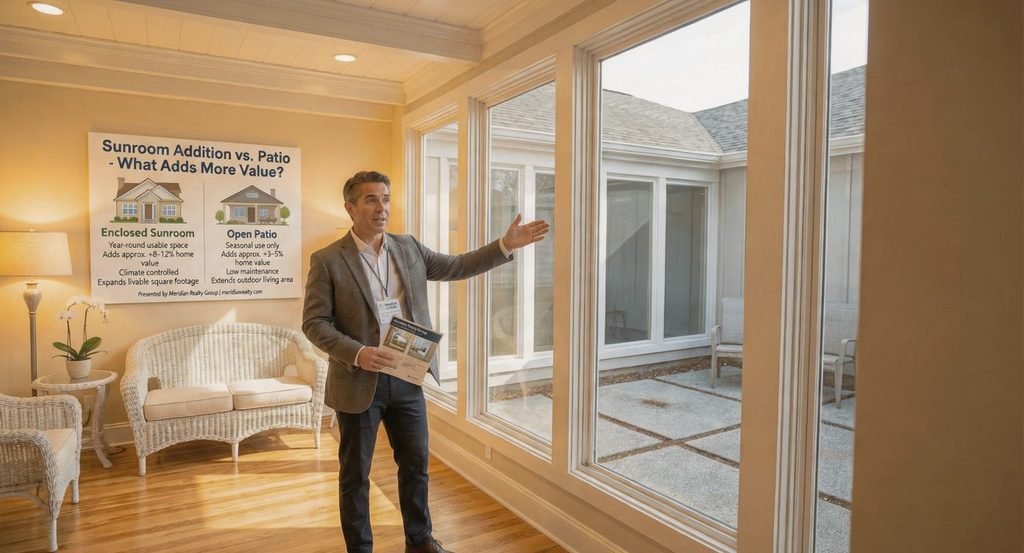
Patios also add value but generally to a lesser degree than sunrooms, since they enhance outdoor living appeal without adding interior square footage. Real estate professionals often note that patios boost curb appeal and lifestyle value more than they increase a home’s assessed square footage.
6. Furniture and Decor Considerations
Sunrooms allow for indoor-style furniture, rugs, curtains, and decor since the space is protected from rain and direct weather exposure. This flexibility lets homeowners decorate the room similarly to any other interior space in their house.
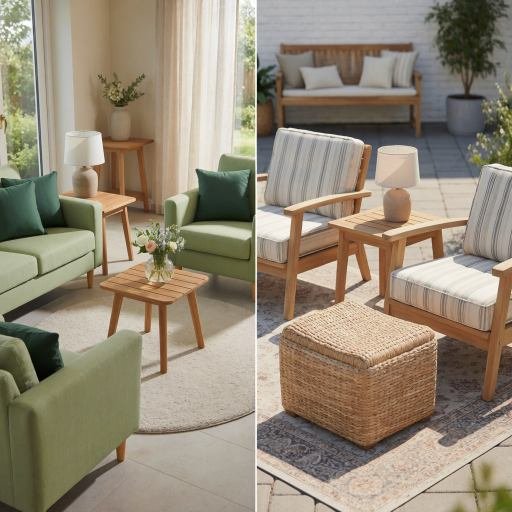
Patios require weather-resistant furniture specifically designed to withstand rain, sun, and temperature fluctuations without deteriorating. This necessity limits decor options to outdoor-rated materials like teak, wicker, or metal, which are typically more expensive than standard indoor furnishings.
7. Natural Light Exposure
Sunrooms are specifically designed with extensive windows or glass walls to maximize natural light while still providing shelter from direct sun exposure and glare through window treatments. This controlled light exposure creates a bright yet comfortable indoor environment.
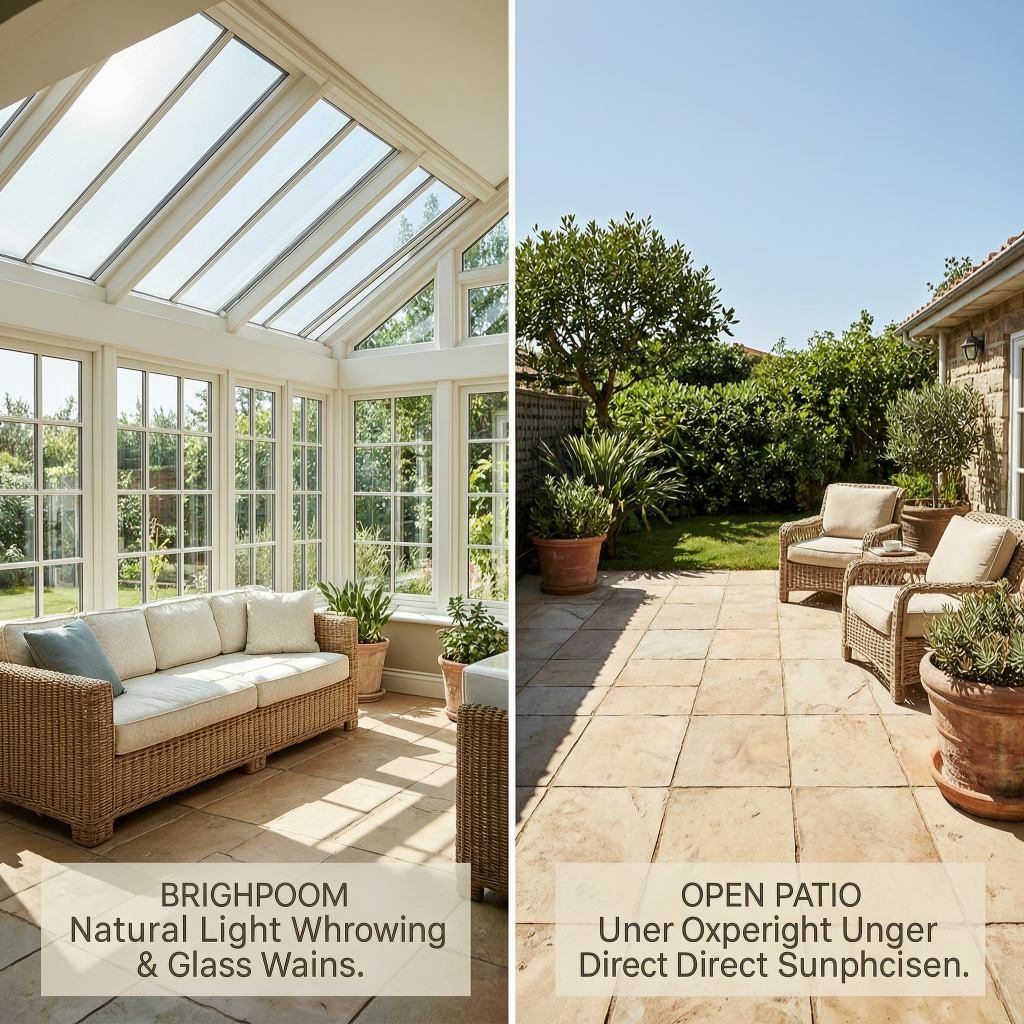
Patios offer completely unfiltered natural light and direct sun exposure, which can be pleasant for sunbathing but often requires umbrellas or shade structures for comfortable extended use. This lack of light control makes patios more variable in comfort throughout different times of day.
8. Insulation and Energy Efficiency
Quality sunrooms include proper insulation in walls, floors, and roofing, allowing the space to retain heat in winter and stay cool in summer when connected to home HVAC systems. This insulation is essential for year-round comfort and energy efficiency.
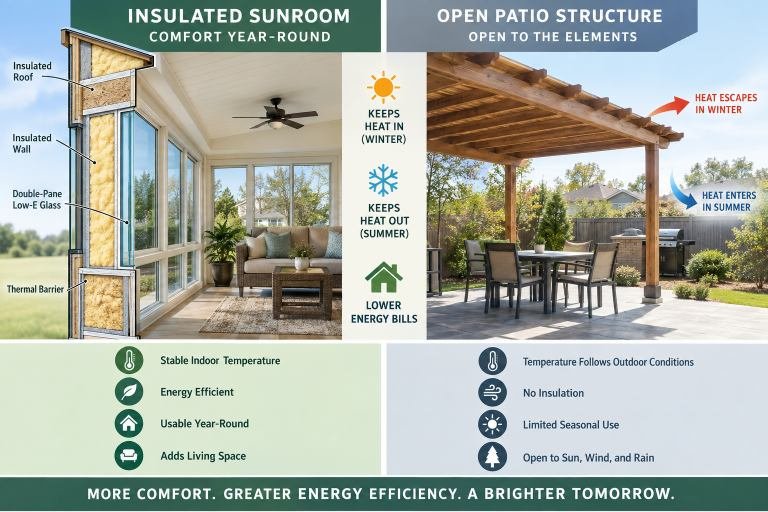
Patios have no insulation requirements since they remain open to outdoor air, meaning there’s no energy efficiency consideration for temperature regulation. This fundamental difference reflects the patio’s role as an extension of the outdoors rather than a climate-controlled room.
9. Bug and Pest Protection
Sunrooms provide complete protection from insects, mosquitoes, and other outdoor pests thanks to sealed windows and doors. This barrier allows homeowners to enjoy garden views and natural light without dealing with bug bites or unwanted visitors during warm months.
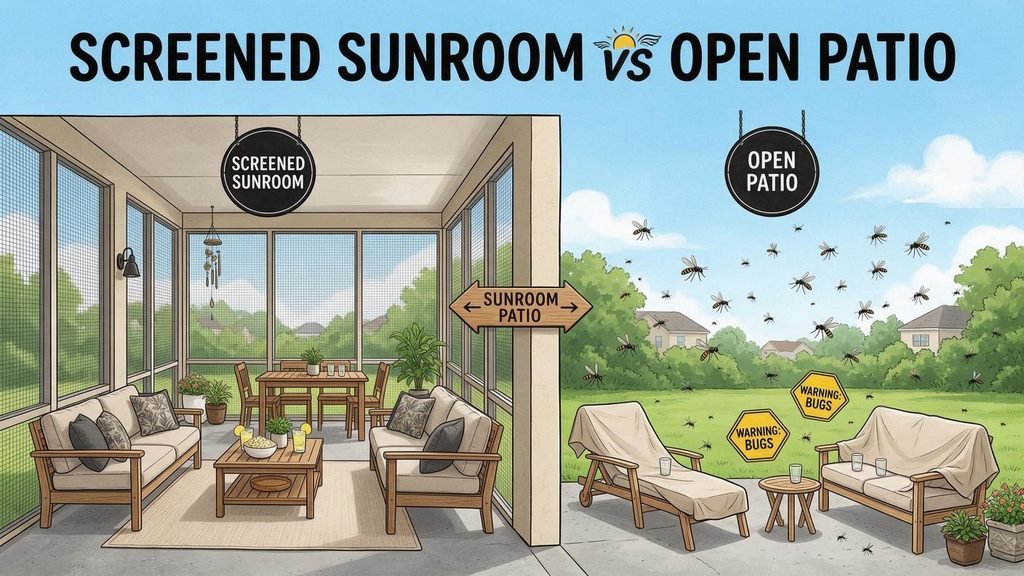
Patios offer no protection from insects unless enhanced with citronella candles, bug zappers, or nearby screened structures. This exposure to pests can significantly impact comfort during peak mosquito season, particularly in humid or wooded regions.
10. Permitting and Building Codes
Sunroom construction typically requires building permits, inspections, and adherence to residential building codes since it’s considered a permanent structural addition to the home. This process involves more paperwork, planning, and regulatory oversight before construction begins.
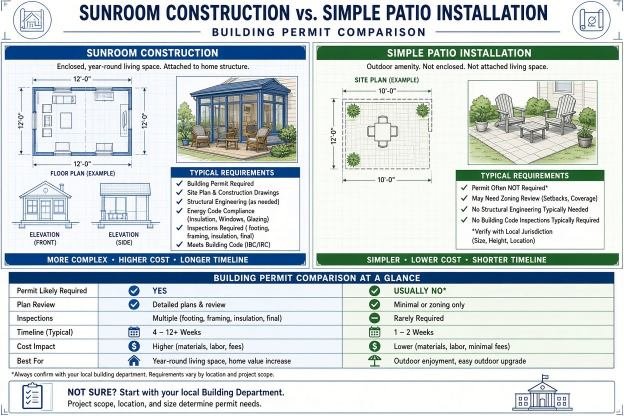
Patios often require minimal or no permitting in many jurisdictions, especially for simple paver or concrete installations at ground level. This streamlined process makes patios a faster, less bureaucratic option for homeowners wanting quicker outdoor living upgrades.
11. Privacy Levels
Sunrooms offer enhanced privacy through walls and window treatments like blinds or curtains, allowing homeowners to control visibility from neighboring properties or the street. This enclosure creates a more secluded, private environment for relaxation.
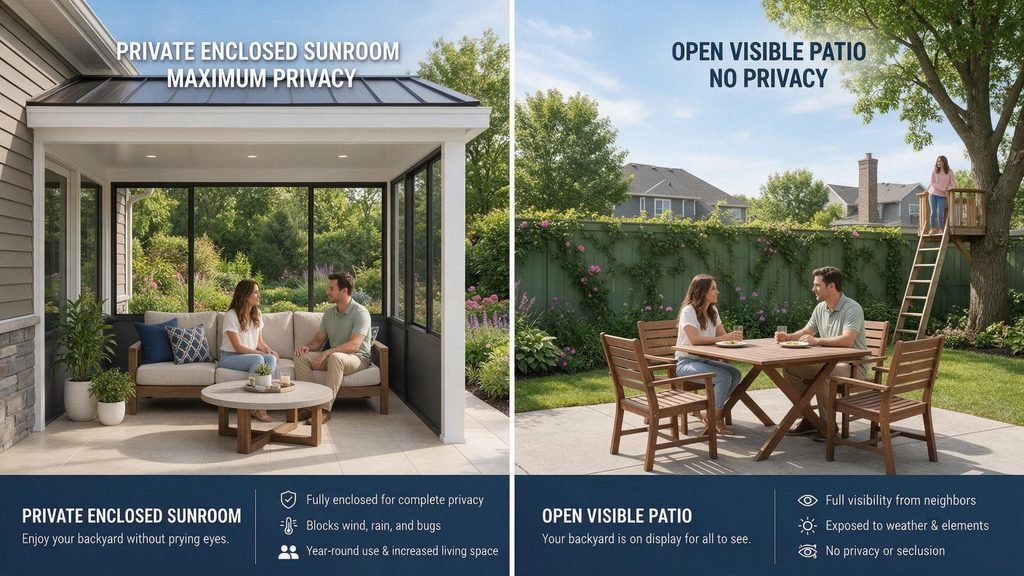
Patios remain visually open to surrounding yards and neighboring properties unless supplemented with fencing, landscaping, or privacy screens. This openness can feel less secluded, particularly in densely populated neighborhoods with closer property lines.
12. Connection to Outdoor Elements
While sunrooms offer beautiful garden views through their windows, occupants remain physically separated from the outdoor elements like grass, soil, and direct fresh air unless windows are opened. This creates a filtered, protected outdoor experience.
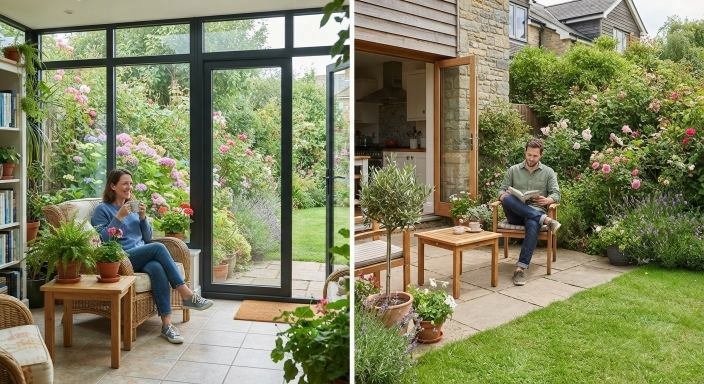
Patios provide direct, unfiltered connection to the yard, allowing occupants to feel grass underfoot, smell garden blooms, and experience fresh air without any barriers. This immersive outdoor connection is something a sunroom, despite its views, cannot fully replicate.
13. Maintenance Requirements
Sunrooms require regular window cleaning, occasional caulking maintenance, and HVAC system upkeep to maintain their climate-controlled functionality. The numerous windows and glass surfaces demand consistent care to keep the space bright and functional.
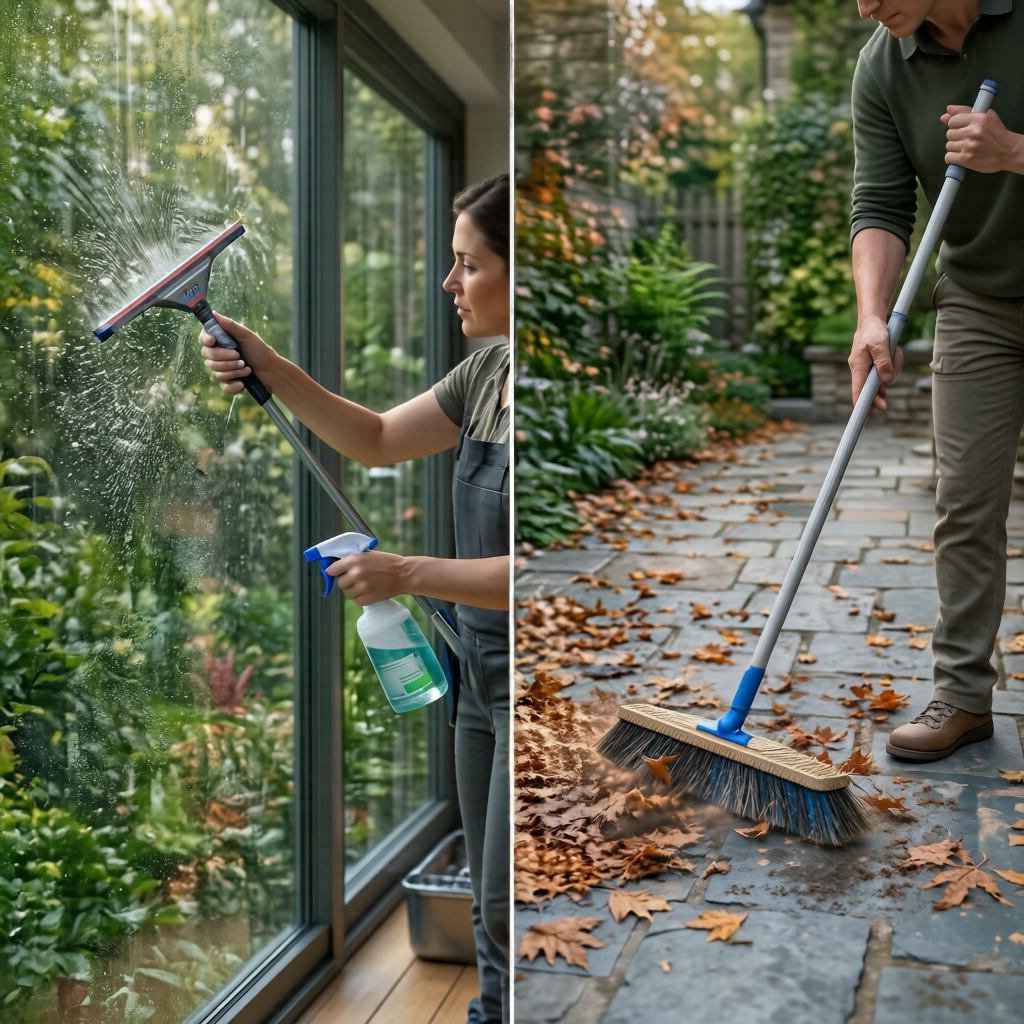
Patios generally require simpler maintenance, like periodic sweeping, pressure washing, or resealing pavers and concrete every few years. This lower maintenance burden appeals to homeowners wanting outdoor living space without extensive ongoing upkeep responsibilities.
14. Heating and Cooling Options
Sunrooms can be equipped with dedicated HVAC systems, mini-splits, or extensions of the home’s existing heating and cooling infrastructure, allowing precise temperature control regardless of outdoor conditions. This investment enables true year-round comfort.
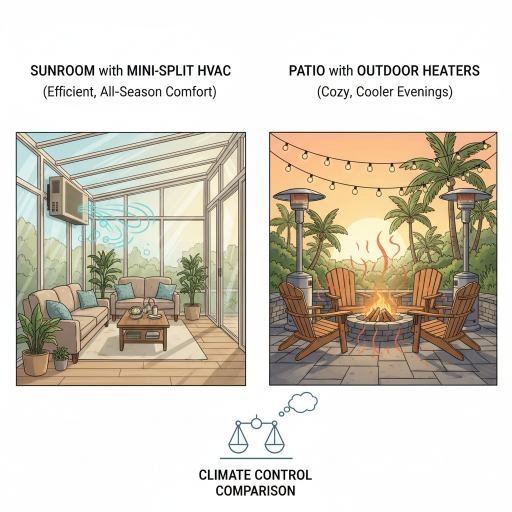
Patios rely on portable solutions like outdoor heaters, fire pits, or fans for temperature management, none of which provide the consistent climate control a sunroom offers. These supplemental options help extend patio usability but can’t fully replicate indoor comfort levels.
15. Impact on Home’s Interior Flow
A sunroom typically connects directly to the home’s interior, functioning as an extension of existing living spaces like the kitchen or living room. This integration creates seamless flow between indoor rooms, often becoming a favorite transitional space in the home.
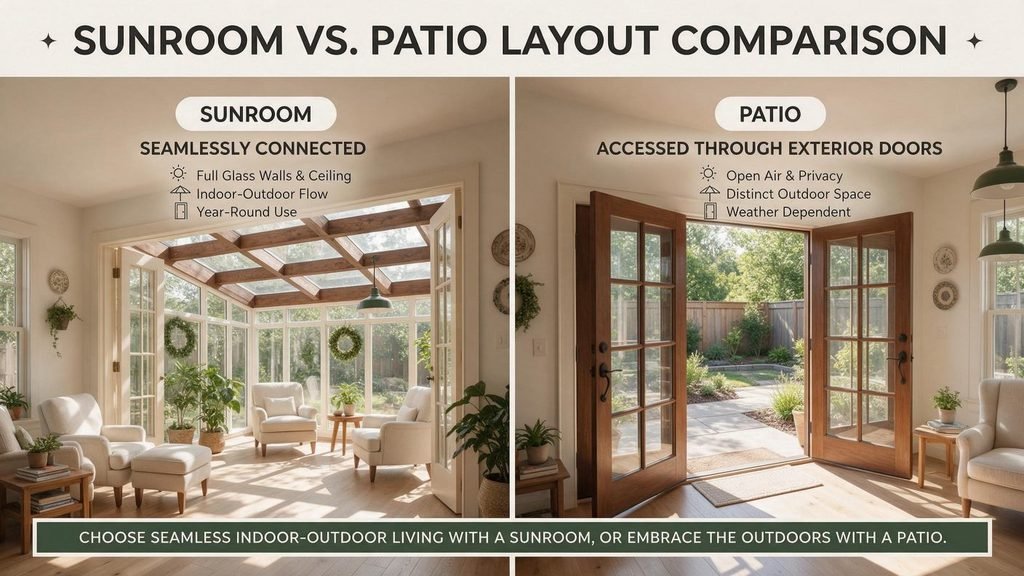
Patios connect to the home through exterior doors but remain a distinctly separate outdoor zone rather than an extension of interior flow. This separation reinforces the patio’s identity as a yard feature rather than part of the home’s internal room layout.
16. Ideal Climate Considerations
Sunrooms offer particular value in regions with harsh winters or extreme summers, since the enclosed, climate-controlled space extends outdoor-adjacent living into seasons when a patio would be unusable. This makes sunrooms especially popular in northern or four-season climates.
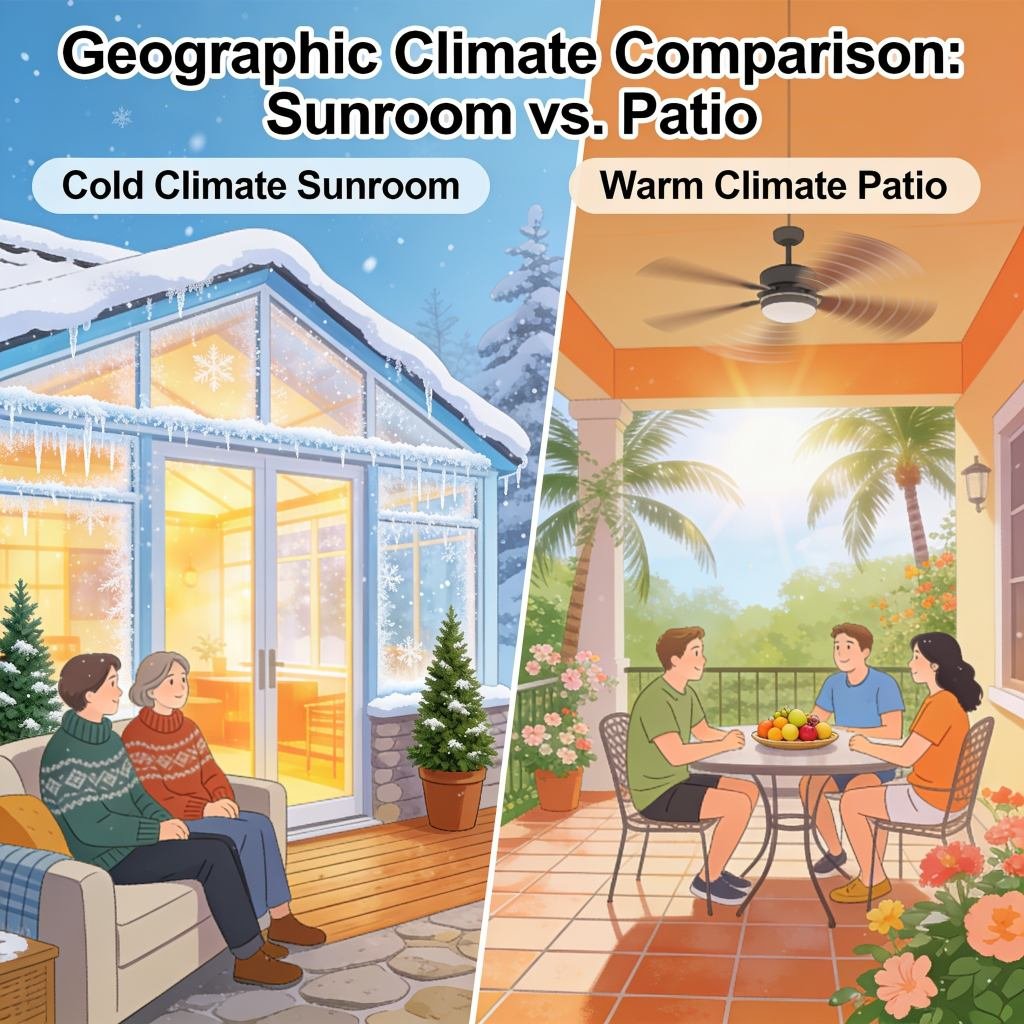
Patios thrive in consistently warm, mild climates where outdoor living remains comfortable most of the year without significant weather extremes. Homeowners in temperate regions often find patios sufficiently functional without needing the additional investment a sunroom requires.
17. Overall Purpose and Lifestyle Fit
A sunroom best suits homeowners wanting an additional, protected living space for reading, plant collections, or quiet relaxation regardless of weather or season. This space functions much like any other room, just with enhanced natural light and garden views.

A patio best suits homeowners prioritizing outdoor entertaining, barbecues, and direct connection to their yard for warm-weather gatherings. This space embraces the outdoor lifestyle, making it ideal for those who enjoy hosting guests or dining al fresco during pleasant seasons.