14 Brilliant Small Living Room Ideas to Maximize Space & Style
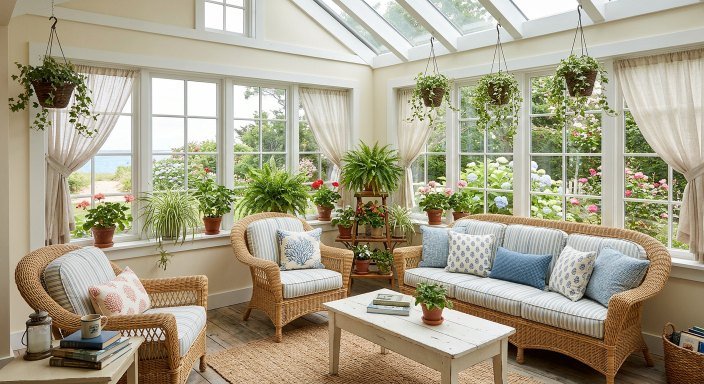
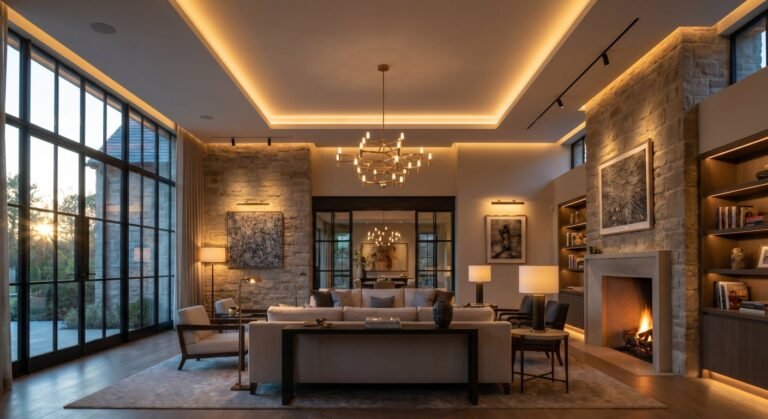
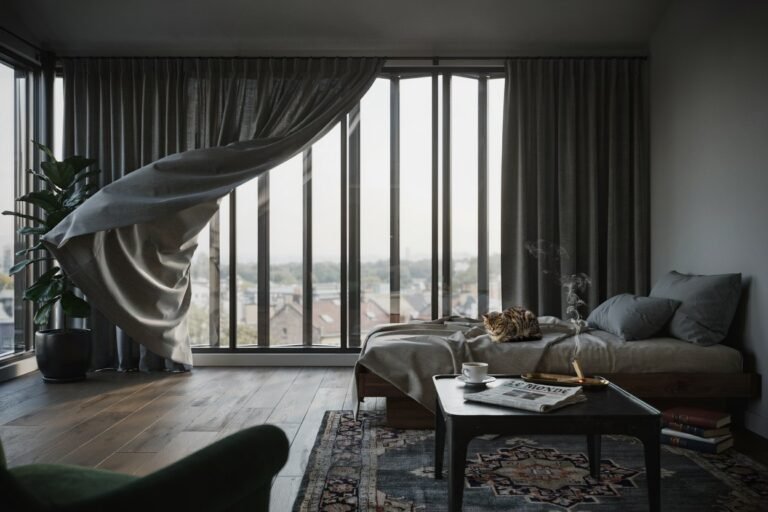
A small living room doesn’t have to feel cramped or compromise on style, it just needs smarter planning than a larger space might require. This Pinterest-inspired guide shares 14 small living room ideas, complete with image prompts and SEO-optimized copy, to help you maximize both space and style in every square foot.
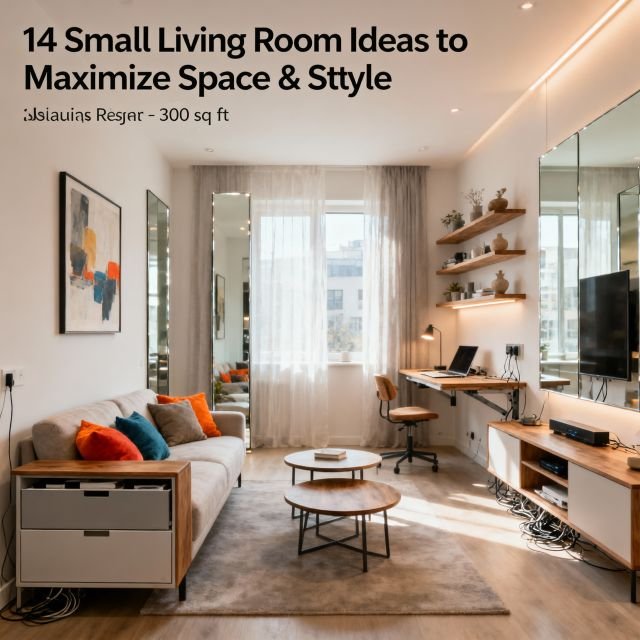
How to Make the Most of a Small Living Room
Making the most of a small living room starts with prioritizing function and flow over cramming in as much furniture as physically possible throughout the space. Every piece should earn its place, whether through storage, comfort, or visual impact. This intentional approach to small living room design prevents the cluttered feeling compact rooms often develop.

These small living room ideas work best when combined thoughtfully rather than applied individually, layering smart furniture choices with light colors, mirrors, and vertical storage. Pinterest boards consistently celebrate small living rooms that feel open and stylish simultaneously, proving that square footage matters far less than intentional, well-planned design decisions throughout the room.
Give your bedroom a polished hotel-style look with these hotel bedding ideas.
1. Start With a Smart Small Living Room Layout
A smart small living room layout begins with identifying the room’s natural traffic flow and arranging furniture to keep walking paths clear and unobstructed throughout. Pushing larger pieces against walls frees up central floor space, while angling a sofa or chair slightly can help define a seating area without physically dividing the room.
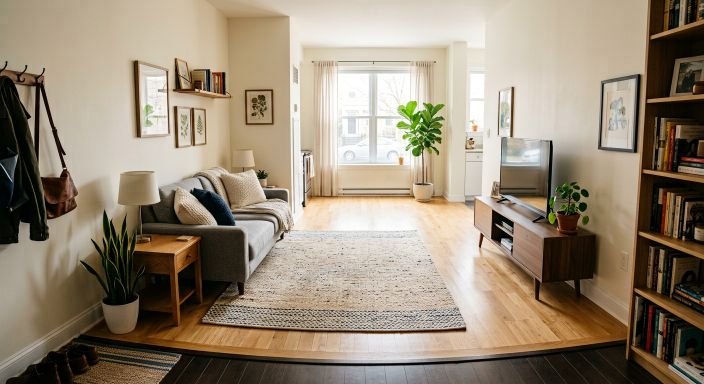
This small living room layout approach also considers sightlines, positioning furniture so the room feels open when viewed from the entrance rather than immediately blocked. Measuring the space accurately before purchasing furniture prevents pieces that are too large for comfortable movement. A thoughtful layout ultimately determines how spacious the finished room actually feels.
2. Choose Furniture That Fits Your Space
Choosing small living room furniture scaled correctly to the room’s actual dimensions prevents the overwhelmed, cramped feeling that oversized pieces often create in compact spaces. Measuring doorways, walkways, and the room itself before shopping ensures every piece fits comfortably without blocking movement or overwhelming the visual balance of the entire space.
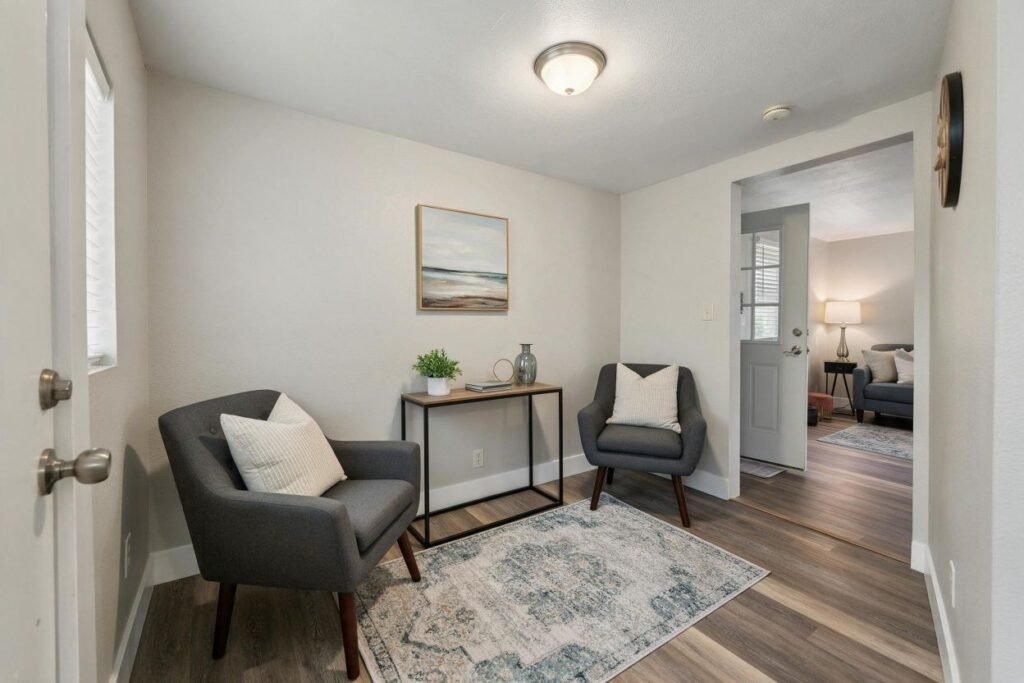
These small living room ideas favor slim profiles, exposed legs, and appropriately proportioned pieces over bulky, oversized furniture designed for larger rooms. Furniture that’s too big for the space, even if beautiful individually, disrupts the room’s overall flow and makes it feel smaller. Correct scale remains one of the most important small living room design principles.
Discover these coquette outfit ideas for a soft, feminine look.
3. Use a Compact or Modular Sofa
A compact sofa or modular sectional offers seating without overwhelming a small living room’s limited floor space, unlike bulky traditional sofas designed for larger rooms entirely. Modular pieces also allow flexibility, letting you rearrange sections as needs change or reconfigure the layout for different occasions without purchasing entirely new furniture down the line.
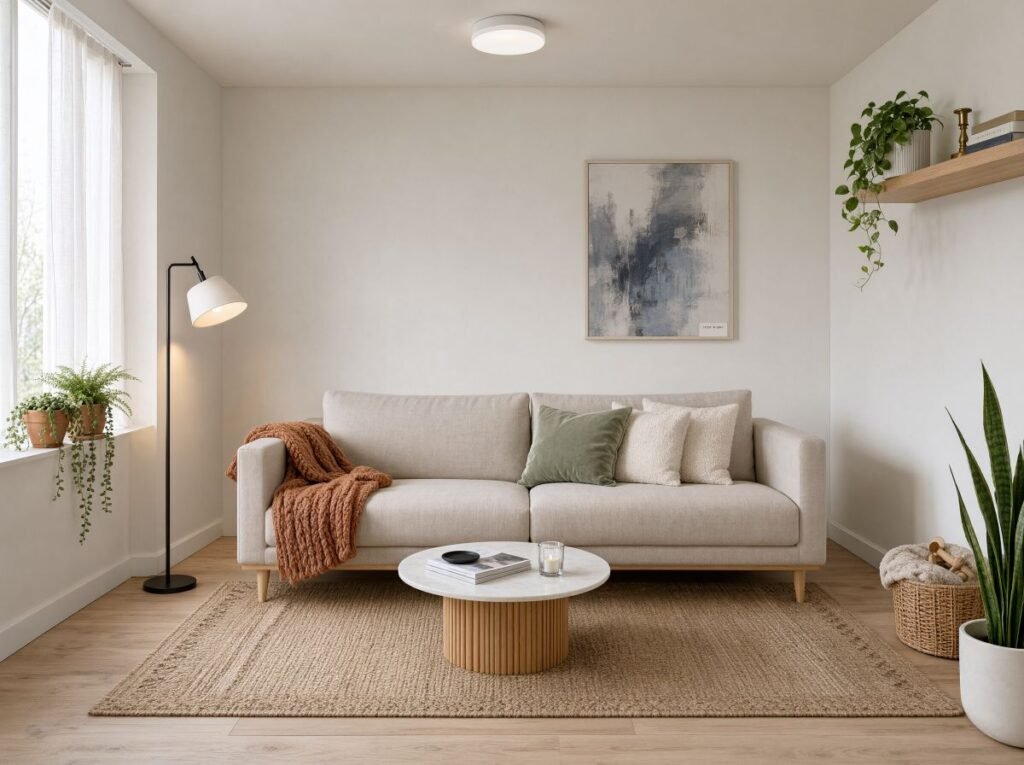
These small living room furniture choices prioritize both comfort and spatial efficiency, ensuring the seating area doesn’t dominate the room’s overall proportions unnecessarily. Loveseats, apartment-sized sofas, and slim armchairs all work well as alternatives to full-sized sectionals. Choosing the right seating scale directly impacts how open and functional the finished room feels.
4. Make Walking Paths Feel Open
Keeping walking paths clear and unobstructed is essential in a small living room, since even beautiful furniture arrangements feel cramped if movement through the space feels difficult. Maintaining at least two to three feet of clearance between major furniture pieces allows comfortable navigation while still keeping the room feeling intentionally arranged rather than empty.
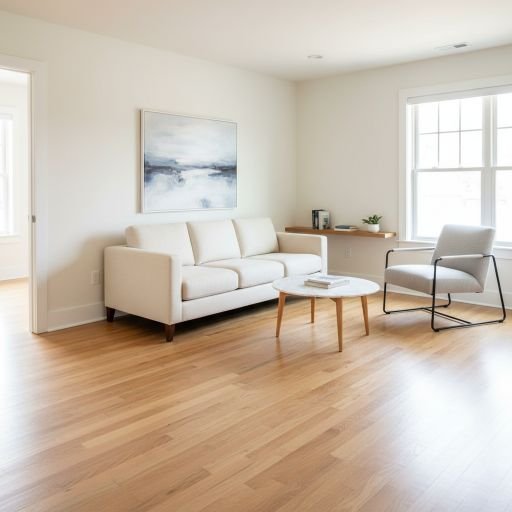
This small living room idea also means resisting the urge to fill every available inch with furniture or decor, since open floor space itself contributes to a room feeling larger. Small living room layouts that prioritize clear pathways consistently feel more spacious and functional than rooms packed tightly with furniture regardless of individual piece quality.
5. Choose Multifunctional Furniture
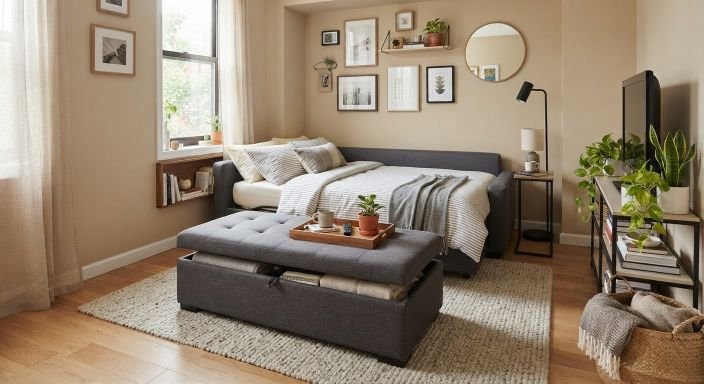
Multifunctional furniture solves one of the biggest challenges in small living room design, allowing single pieces to serve multiple purposes without requiring additional floor space elsewhere. A storage ottoman that doubles as a coffee table, or a sleeper sofa for occasional guests, maximizes functionality without adding visual or physical bulk to the room.
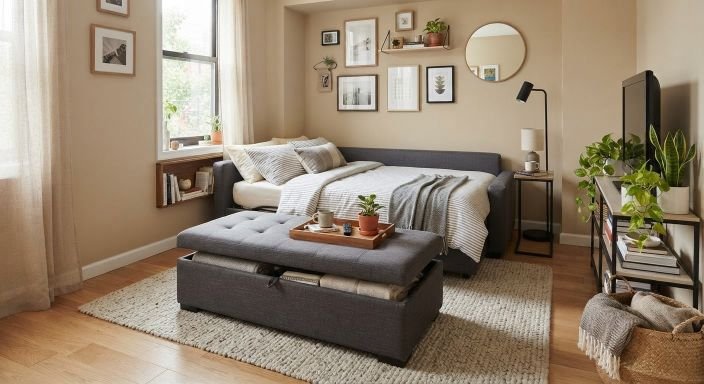
These small living room ideas prove especially valuable for apartments or homes where the living room must accommodate several different activities throughout the day. Nesting tables, fold-down desks, and extendable furniture all offer similar flexibility. Choosing multifunctional pieces ultimately stretches a small living room’s usefulness well beyond its actual square footage.
Try these baggy pants outfit ideas for a trendy, chic look.
6. Add Smart Storage Without Cluttering the Room
.
Smart storage keeps a small living room feeling tidy and spacious, since visible clutter is one of the fastest ways to make a compact space feel even smaller. Built-in shelving, storage ottomans, and furniture with hidden compartments all provide practical storage without consuming additional floor space or disrupting the room’s overall visual flow.

These small living room decorating ideas prioritize concealed storage over open shelving in particularly tight spaces, keeping surfaces clear and uncluttered throughout the room. Baskets, closed cabinets, and under-furniture storage all help maintain this tidiness effortlessly. A well-organized small living room consistently feels calmer and more spacious than one filled with visible clutter.
7. Use Mirrors to Make a Small Room Feel Bigger
Mirrors are one of the most effective small living room ideas for creating the illusion of additional space, reflecting both natural light and the room’s existing depth throughout. Positioning a large mirror opposite a window doubles the perceived light source, while mirrors placed strategically elsewhere can make walls feel like they extend further back.
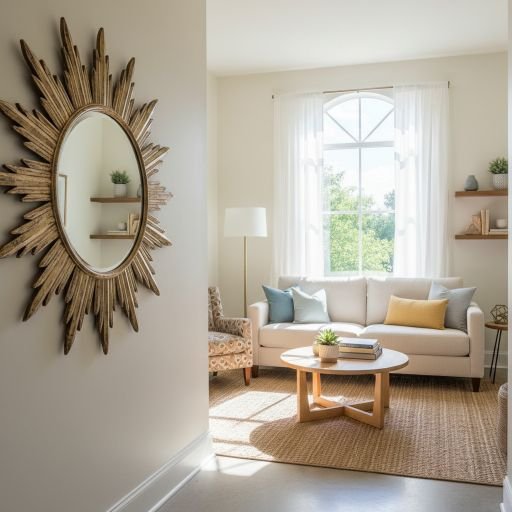
This small living room design trick works particularly well in rooms with limited natural light or awkward proportions that feel closed in without intervention. Choosing an appropriately sized mirror, rather than something too small to make an impact, ensures the effect feels intentional. Mirrors remain a consistently popular, budget-friendly small living room upgrade.
8. Choose Light Colors for an Airier Look
Light colors reflect available light more effectively than dark tones, making them a foundational choice among small living room ideas for creating an airier, more open atmosphere. Soft whites, light grays, and pale neutrals on both walls and furniture help the room feel expansive rather than closed in, regardless of the actual square footage.

This small living room design approach doesn’t mean avoiding color entirely, since accent pieces or a single feature wall can still add personality without darkening the overall palette. Small living room decorating ideas that balance light foundational colors with selective darker accents achieve both brightness and visual interest simultaneously throughout the compact room.
9. Layer Your Lighting
Layered lighting prevents a small living room from relying on a single harsh overhead fixture, which often creates flat, uninviting illumination throughout the entire compact space. Combining floor lamps, table lamps, and dimmable ceiling fixtures allows flexibility for different activities and times of day without overwhelming the room’s limited square footage unnecessarily.
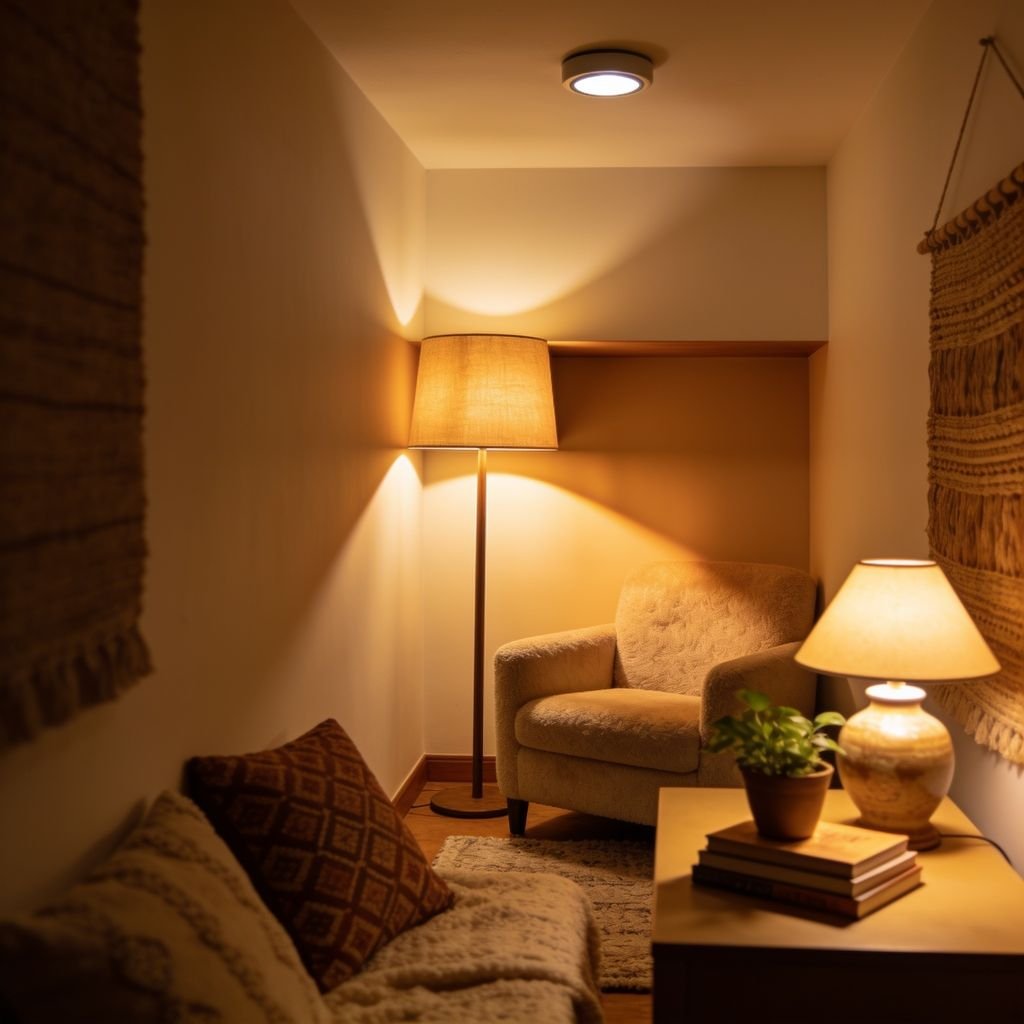
These small living room ideas also use lighting to highlight specific zones, like a reading corner or seating area, adding depth and dimension to the room. Warm-toned bulbs enhance coziness, while strategically placed lamps can make the room feel larger by illuminating corners that overhead lighting alone often misses entirely.
10. Pick the Right Coffee Table
Choosing the right coffee table matters significantly in a small living room, since an oversized table can dominate the room while one that’s too small feels impractical. Round or oval tables often work better than rectangular ones in tight layouts, softening sharp corners and improving flow around the seating area throughout the space.

These small living room furniture choices also benefit from glass or acrylic tables, which visually take up less space than solid wood alternatives despite offering the same functionality. A nesting table set offers additional flexibility, expanding when needed and tucking away when not. Proportion remains the key consideration when selecting this central piece.
11. Use Vertical Space for Storage and Decor
Vertical space is often underutilized in small living rooms, yet tall bookshelves, wall-mounted storage, and hanging decor can add significant functionality without consuming valuable floor area. Drawing the eye upward also makes ceilings feel higher, contributing to an overall sense of spaciousness that horizontal furniture arrangements alone simply can’t achieve as effectively.
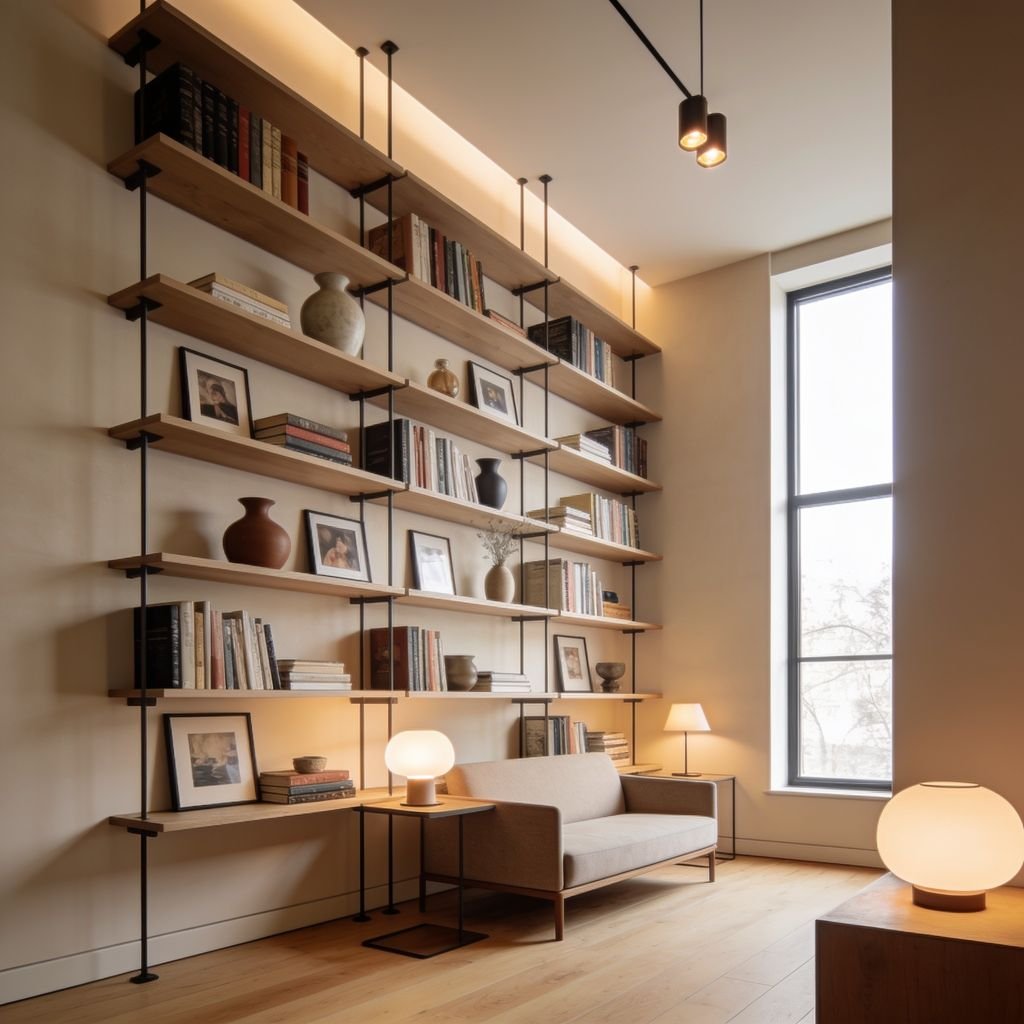
These small living room ideas prove especially useful for storing books, decor, or media equipment that would otherwise clutter surfaces or require additional floor-standing furniture. Floating shelves in particular offer storage without the visual bulk of traditional cabinets. Maximizing vertical space remains one of the smartest strategies for small living room design.
12. Create a Focal Point
Establishing a clear focal point, whether a piece of artwork, an accent wall, or a fireplace, gives a small living room visual direction rather than feeling like a collection of unrelated furniture pieces scattered throughout. This anchor draws the eye to one intentional spot, making the rest of the room feel more organized and purposeful.
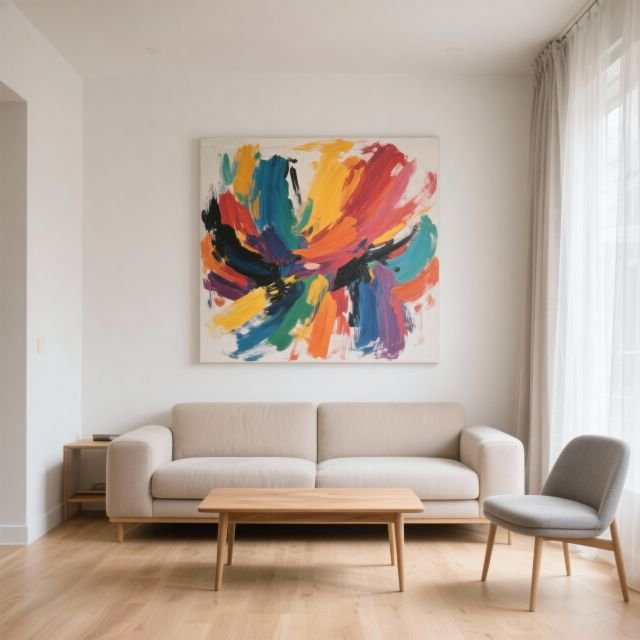
These small living room ideas work best when the surrounding furniture and decor remain relatively simple, allowing the chosen focal point to stand out without competing for attention. A single statement piece often creates more visual impact than many smaller decorative items spread throughout the room. This approach keeps small spaces feeling curated.
13. Add Personality With Color and Pattern
Small living rooms don’t need to stay entirely neutral to feel spacious, and adding personality through color and pattern in smaller doses keeps the space feeling vibrant rather than sterile. Accent pillows, a patterned rug, or a single bold piece of artwork introduce character without overwhelming the room’s light, airy foundation throughout the space.
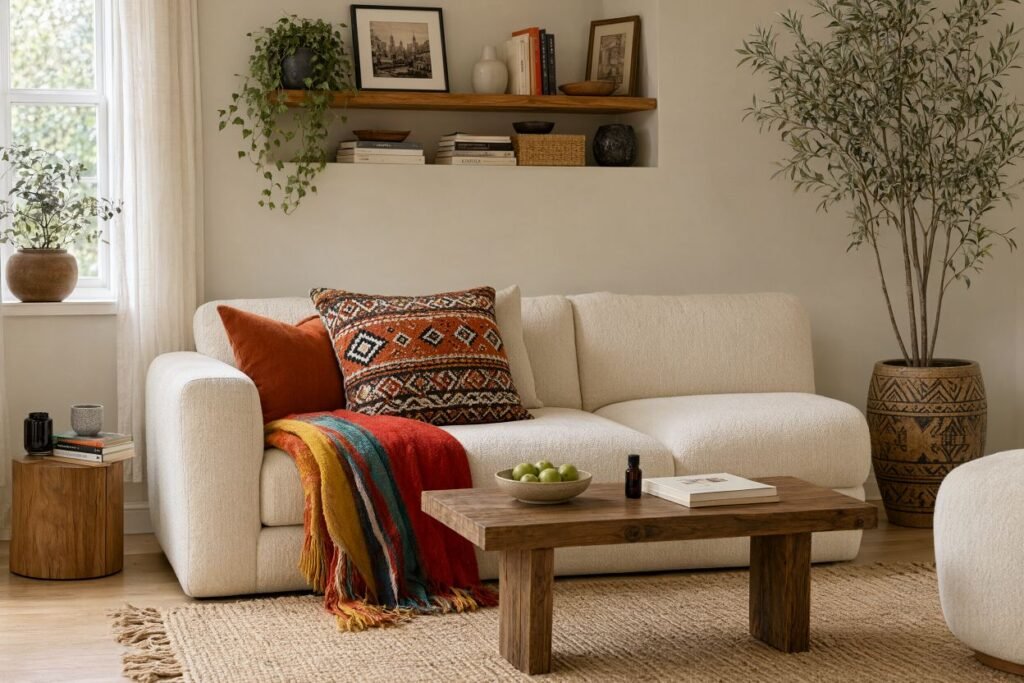
These small living room decorating ideas prove that restraint and personality can coexist, using color strategically rather than avoiding it altogether out of fear of making the room feel smaller. Choosing a cohesive color palette for these accents keeps the overall look intentional. Personality ultimately makes a small living room feel like home.
14. Keep the Room Balanced and Uncluttered
Balance and restraint matter enormously in small living room design, since even well-chosen furniture and decor can feel overwhelming if too many pieces compete for attention throughout the room. Editing decor down to a few meaningful items, rather than displaying everything at once, keeps the space feeling calm, intentional, and genuinely livable every day.
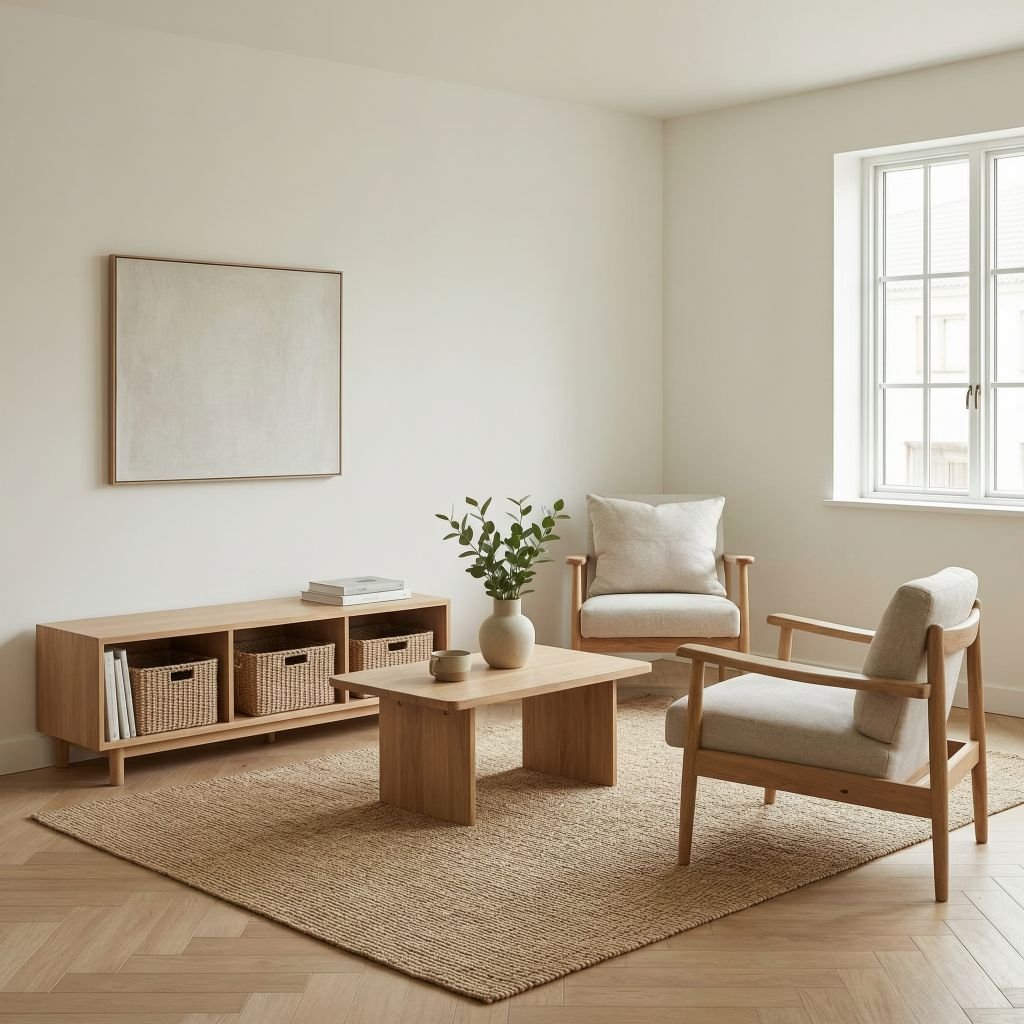
These small living room ideas ultimately come together most successfully when every element serves a purpose, whether functional or purely decorative, without unnecessary clutter accumulating over time. Regularly reassessing what’s actually needed in the space helps maintain this balance long-term. A well-edited small living room consistently feels larger, calmer, and more stylish overall.